TIME & LOCATION
Dec 10, 2025, 10:30-12:00
Room 322, School of Transportation
INTRODUCTION
By 2035, nearly half of all newly produced vehicles are expected to be connected, generating an unprecedented volume of mobility data. For more than seven decades, traffic-network equilibrium models have served as the cornerstone of transportation planning and management. This talk presents an AI-driven inverse-learning framework that exploits these emerging connected-vehicle data to automatically reconstruct such equilibrium models from massive trajectory sets.Traditional calibration of network equilibrium models is typically time-consuming and expensive. We propose AI-driven inverse learning as a new paradigm that directly extracts non-parametric, environment-adaptive equilibrium models from big mobility data. When data are abundant, a fully non-parametric, neural-network-based inverse learner requires no behavioral assumptions a priori and can learn any well-posed equilibrium mapping straight from the data. Conversely, a semi-parametric variant converts the inverse problem into a sequence of convex optimization problems, offering superior computational tractability. We mathematically contrast non-parametric and parametric approaches, characterizing the trade-offs among behavioral realism, data requirements, and computational cost.Finally, we apply the framework to a long-term network-design problem in Ann Arbor, Michigan. Using real connected-vehicle trajectories, we learn an environment-adaptive equilibrium model and embed it within an automatic-differentiation-accelerated algorithm that solves a distributionally robust bi-level network-design problem under contextual uncertainty.
ABOUT THE LECTURER
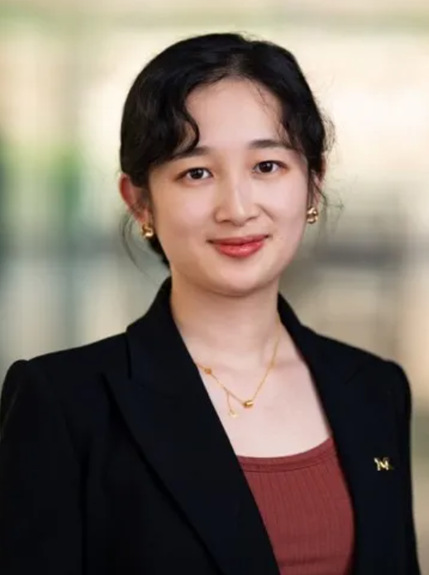
Dr. Zhichen Liu is currently an Assistant Professor in the Department of Civil Engineering at Stony Brook University. Her research focuses on developing next-generation modeling and computational tools for transportation and logistics systems in the context of connectivity, electrification, and automation. She holds a Ph.D. in Civil Engineering and an M.S. in Industrial and Operations Engineering from the University of Michigan, and was formerly a Visiting Scientist at General Motors.